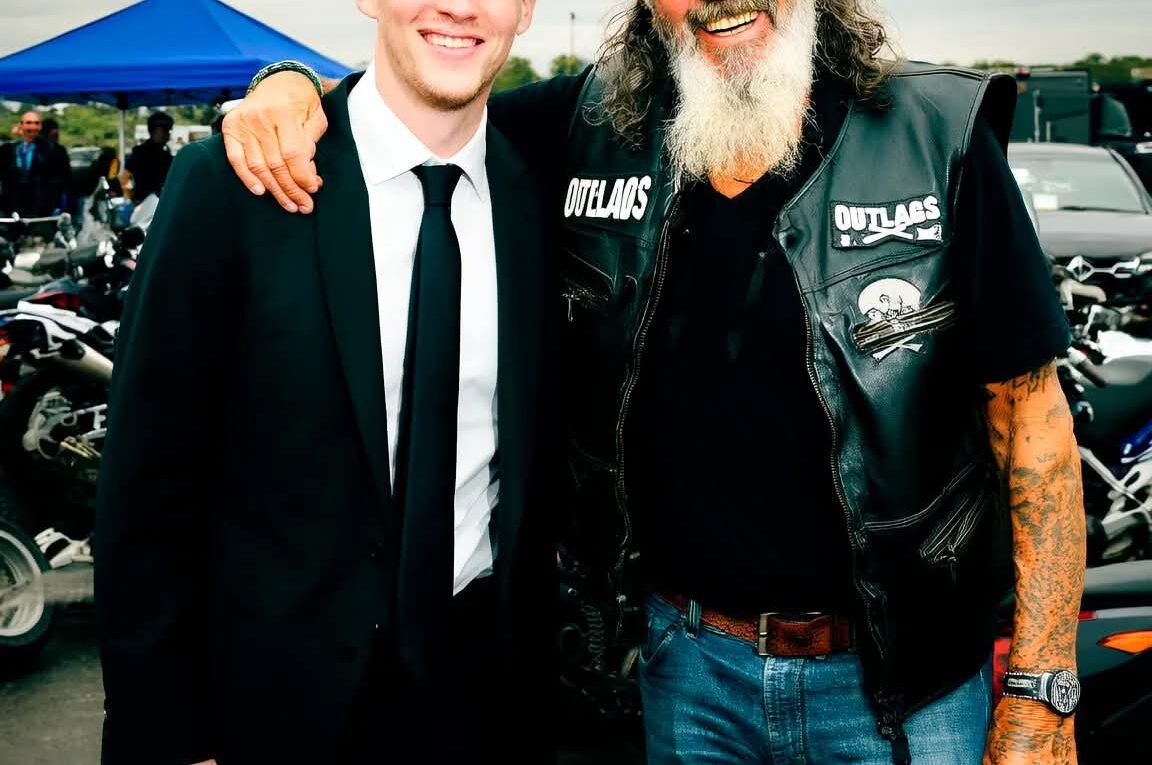
The Sanctuary of the Grease Pit and the Legal Shield of a “Throwaway” Son
The story of Big Mike and David is a profound subversion of the “broken home” narrative, proving that the most resilient family structures are often built on oil-stained floors rather than in suburban living rooms. When a six-foot-four mechanic found a fourteen-year-old foster runaway scavenging for crusts in a dumpster, he didn’t offer a lecture on legality or a phone call to a failing social service system; he offered a wrench and a sandwich. This unconventional rescue transformed a “throwaway” child into a strategic legal mind, illustrating that the loudest motorcycles often carry the quietest, most transformative acts of mercy.
The conflict between David’s “respectable” professional life and his biker upbringing highlights a common psychological hurdle: the shame of origin. For years, David attempted to curate a sterile version of his identity, labeling Mike as a “family friend” to appease the high-brow expectations of law school and prestigious firms. This internal chasm only closed when the city’s attempt to condemn Mike’s shop forced David to choose between his polished facade and the man who taught him that every man needs to know how to work with his hands. It was a surgical return to a “blighted” community that actually functioned as a high-stakes sanctuary for the vulnerable.
The courtroom revelation—where a senior partner at a top firm identified himself as a “dumpster kid”—effectively dismantled the city’s sterile definition of “community.” By putting the human results of Mike’s “kidnapping” on the stand, David transformed the trial from a zoning dispute into a referendum on kindness. The testimony of doctors, teachers, and social workers who had all once found safety in Mike’s back room proved that “degrading the neighborhood” was merely a code for class-based prejudice. The judge’s final decision acknowledged that while Mike’s methods weren’t documented by the state, his results were the very definition of an “asset to the community.”
“If that makes his shop a ‘blight on the community,’ then maybe we need to redefine community.”
The cycle of rescue continues at Big Mike’s Custom Cycles, now legally protected and morally vindicated. The image of the fifteen-year-old thief being handed a sandwich and a wrench instead of a pair of handcuffs is a powerful echo of David’s own salvation, suggesting that true redemption is a generational baton. Today, David navigates both worlds with grease under his fingernails and a three-piece suit in the closet, proving that family isn’t determined by blood or legal filings, but by the person who refuses to throw you away when the rest of the world has.