MY SON SOLD HIS PRIZED GUITAR TO BUY A CLASSMATE A WHEELCHAIR, THEN THE POLICE RATTLED OUR FRONT DOOR
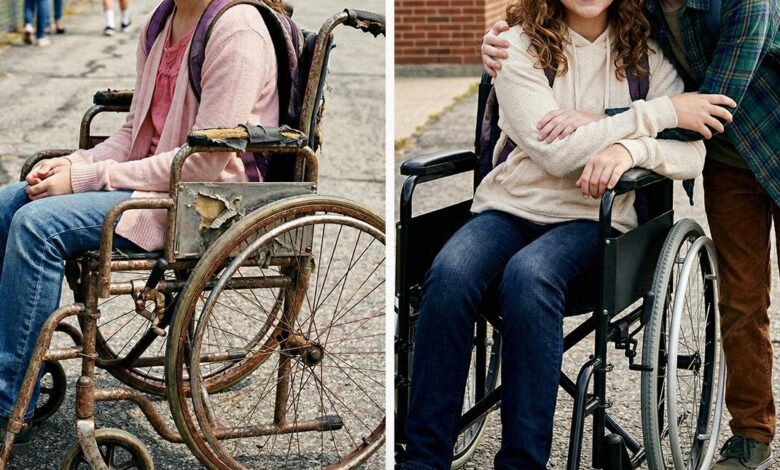
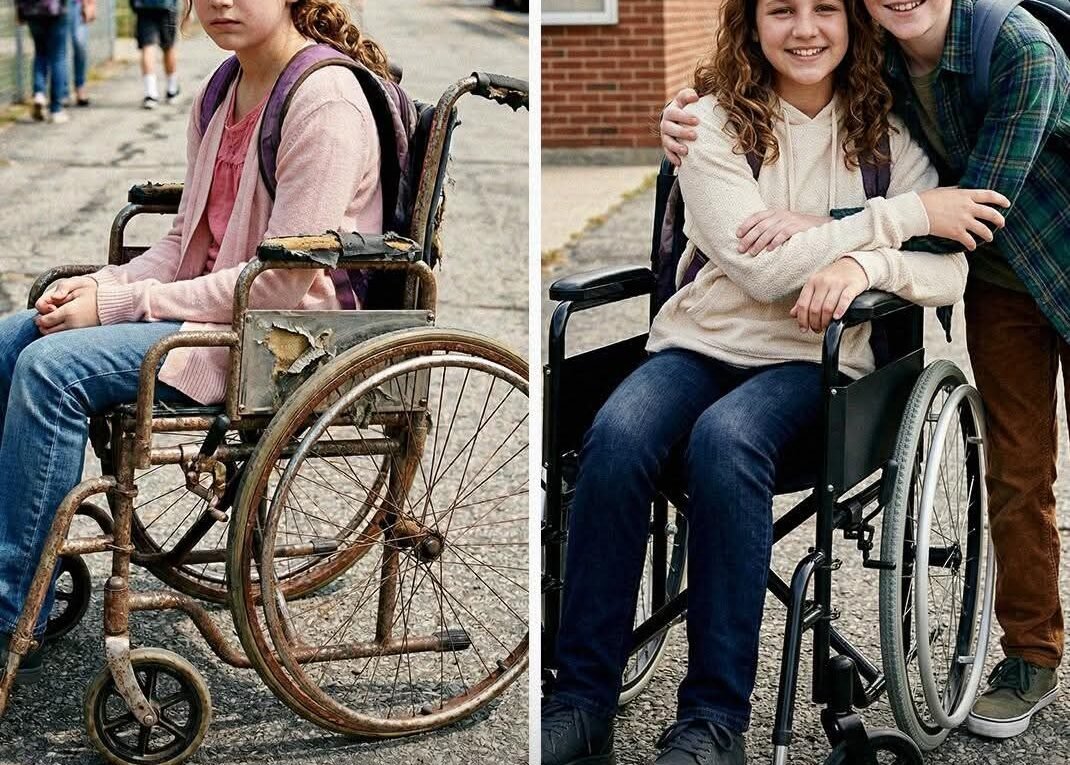
The sight of an empty guitar stand in my thirteen-year-old son’s room was the first sign that something had shifted in our world. David lived for that instrument; it was his sanctuary and his voice. When I confronted him, expecting a tale of teenage recklessness, he looked me in the eye and told me he had sold it to Mr. Keller from church for $850. The reason? His classmate, Emily, was struggling in an old, broken wheelchair that kept her from reaching the lunchroom on time. She was suffering in silence, and my son decided that his music was less important than her mobility.
I was stunned. As a mother who prides herself on practical lists and stretched grocery budgets, I was humbled by a boy who skipped the bureaucracy of “grown-up solutions” and went straight to sacrifice. We picked up the new chair from the hospital that afternoon. When we arrived at Emily’s house, the scene was one of raw, unfiltered emotion. Emily’s mother, Jillian, wept as David awkwardly explained the gift, and her father, Nathan—a man clearly exhausted by the weight of providing for a family in crisis—stood in a silence so heavy it felt like it might break him. David had seen a need that the adults in the room had somehow missed.
I thought that was the end of the story—a quiet lesson in empathy. But the next morning, a thunderous knock rattled my front door. My heart plummeted into my stomach as I opened it to find two uniformed officers, Daniels and Cooper, looming on my porch. My mind raced through every terrifying “what if” a mother can imagine. Had David broken a law? Was the sale of the guitar somehow illegal? “Is your son here?” Officer Daniels asked, his voice stern. I told David to put on his shoes, determined that if this was a nightmare, he wouldn’t face it in his socks.
We followed the officers to Nathan’s house, my nerves frayed and my protective instincts on high alert. But when we stepped inside, the “crime scene” I expected was actually a celebration. A massive breakfast spread covered the table, and the air smelled of maple syrup and fresh coffee. Then, I saw it: a sleek, brand-new guitar case leaning against the kitchen wall.
Nathan stepped forward, his eyes shimmering with unshed tears. He explained that after David left the day before, he had told his fellow officers at the precinct about the thirteen-year-old boy who sold his most prized possession for a girl he barely knew. Moved by the story, every officer on the shift had pitched in. This wasn’t just a thank-you; it was a tribute. “I kept telling myself I was providing for my family,” Nathan whispered, his voice cracking. “Meanwhile, my daughter was struggling right in front of me, and your son was the one who actually saw her.”
Emily, beaming in her new, gleaming chair, made David promise he wouldn’t sell this one within twenty-four hours. The room was filled with laughter, but the underlying weight of the moment wasn’t lost on any of us. Those officers hadn’t just come to replace a guitar; they had come because David’s quiet act of kindness had shaken a group of hardened adults awake.
Back home, I watched David sit on his bed, softly strumming the new strings. He didn’t look like a hero; he looked relieved. I realized then that my son hadn’t just bought a classmate a wheelchair; he had reminded an entire community that the most powerful thing you can do with what you love is use it to lift someone else up. My fear of that morning’s “knock at the door” had turned into the proudest moment of my life.