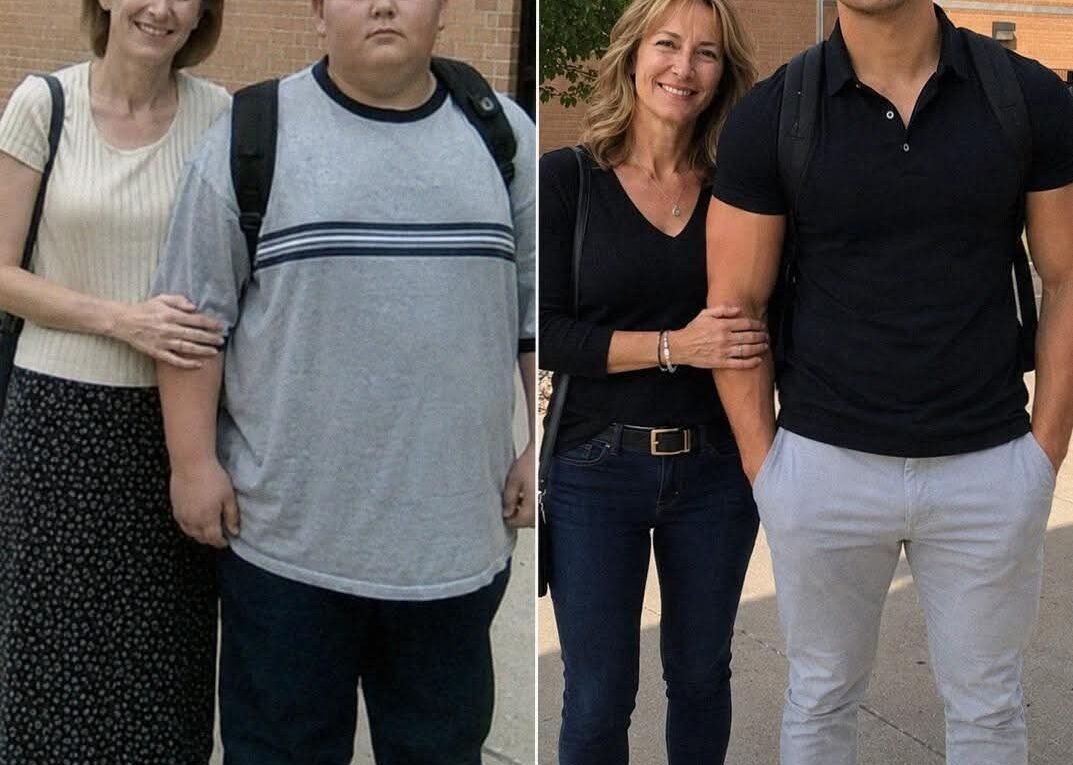
My Son Was Mistreated Throughout School – They Didn’t Even Invite Him to the 10-Year Reunion
19 – 24 minutes
For years, my son was the kid nobody picked, nobody invited, and nobody seemed to notice. Then his entire graduating class organized a ten-year reunion and somehow forgot to invite him again. They thought the story would end the same way it always had. They were wrong.
The night my son walked into his high school class reunion without an invitation, every conversation in the room stopped. Some people looked confused. Others looked uncomfortable. A few exchanged glances as if they were trying to figure out who had invited him.
Evan noticed all of it. And smiled.
Five minutes later, he stepped onto the stage, took the microphone, and left every person in that room speechless.
But to understand why, you have to understand what those same people were like a decade earlier.
Back then, my son spent most of high school eating lunch alone.
While other students filled cafeterias with laughter and plans for the weekend, Evan usually sat by himself. Sometimes he’d bring a book. Sometimes he’d scroll through his phone. Sometimes he’d stare out the window and pretend he didn’t notice the empty seats around him.
But I was his mother.
I noticed everything.
When Evan was little, I used to believe kindness would be enough. Maybe that’s naïve, but it’s true. He was the kind of child who held doors open for people without being asked.
If another student forgot a pencil, he’d lend them one. If someone dropped their books, he’d stop and help pick them up.
For a long time, I thought the world would reward that kind of goodness.
Instead, school taught him a different lesson.
The other kids didn’t necessarily target him every day. Most of the time, they simply acted as if he didn’t belong. Birthday parties came and went without invitations.
Weekend plans were discussed in front of him as though he wasn’t there. When teachers assigned group projects, his face would fall ever so slightly as everyone else paired off before he had the chance.
No child should become familiar with that feeling.
Yet somehow, my son did.
But there was one exception: Mrs. Carter, the school’s guidance counselor.
She had a habit of noticing students that other people overlooked. More than once, Evan came home and mentioned a conversation he’d had with her.
Sometimes she’d check in after a difficult day, and other times she’d simply remind him that high school wasn’t forever.
At the time, I don’t think either of us realized how much those conversations mattered.
I remember one evening during his sophomore year when I found him sitting alone on our back porch after dinner. The sun had already set. He was staring into the darkness with his hands folded together.
“Everything okay?” I asked.
“Yeah.”
The answer came too quickly.
I sat beside him anyway, and after a long silence, he shrugged and said, “Do you think some people are just born unlikable?”
The question hit me like a punch to the chest. I wanted to tell him he was wrong and give him one of those reassuring speeches parents keep in their back pockets. Instead, I asked, “Why would you think that?”
He shrugged again. “No reason.”
But there was a reason.
There always was.
What made it so hard was that Evan never became bitter. Even after years of exclusion, he kept trying.
Every new school year seemed to come with renewed optimism. He’d tell himself things would be different. He’d join clubs, start conversations, and volunteer for activities.
For a little while, I’d allow myself to hope too. Then the pattern would repeat.
By senior year, I think we both knew the truth. The people around him had already decided who he was, and nothing he did seemed capable of changing their minds.
The day he graduated should have felt triumphant. In many ways, it did. I remember sitting in the auditorium, watching him walk across the stage in his cap and gown. While everyone around me cheered for their children, I found myself fighting back tears for a different reason.
I wasn’t emotional because high school was ending.
I was emotional because he had survived it.
When the ceremony was over, we took pictures in the parking lot. I wrapped my arms around him and said, “You never have to see any of these people again.”
For the first time all day, he laughed. “That’s the best graduation gift you’ve given me.”
And honestly? I felt exactly the same way.
After that, life slowly moved forward. Evan went to college several states away. He studied business, worked part-time jobs, and built a life that had nothing to do with the people who had spent years overlooking him.
The distance seemed good for him.
Every time he came home, he looked a little lighter, a little more confident, a little more like the version of himself I’d always seen.
Eventually, he launched a small consulting company with two friends he met in college. At first, they operated out of a cramped office above a bakery. Then they hired their first employee.
Then their fifth.
Before I knew it, they had over 20 employees.
And the company had grown into something far bigger than any of us expected.
I was proud of him.
Not because of the success, but because for the first time in his life, he was surrounded by people who genuinely appreciated him.
Then, just like that, nearly a decade passed since the day he graduated high school.
One afternoon, everything came rushing back. Evan was visiting me for dinner when I noticed him staring at his phone.
His expression wasn’t angry. It wasn’t sad either. It was something in between. “What is it?” I asked.
He hesitated. Then turned the screen toward me. At first, I didn’t understand what I was looking at. Then I saw the title.
CLASS OF 2014: TEN-YEAR REUNION.
Below it were dozens of comments; people confirming attendance, sharing memories, and posting old photos. The entire graduating class seemed to be involved.
I frowned. “So?”
For a moment, Evan didn’t answer. Then he gave a short laugh. “I wasn’t invited.”
I stared at him. “What?”
“Apparently, everyone got an invitation except me.”
My stomach dropped.
Surely that couldn’t be true. But the more we looked, the clearer it became. Former classmates were discussing invitation emails, venue details, and ticket information.
Everyone seemed aware of the reunion, everyone except my son. Ten years later, and somehow, they still found a way to exclude him.
The old anger returned instantly. Not because I expected those people to matter anymore. But because I remembered exactly how much effort Evan had spent trying to belong.
I remembered all the lunches he ate alone, all the weekends he spent at home, all the times he pretended not to care. And now this.
“Evan,” I said quietly, “I’m sorry.”
He surprised me by smiling.
A real smile. Not a forced one, not a sad one. Just a smile. Then he leaned back in his chair. “You know what?”
“What?”
“I’m going anyway.”
I blinked. “Without an invitation?”
“Yep.”
I couldn’t help laughing. “Why?”
For a moment, he looked out the window. Then he said something I didn’t fully understand at the time. “Because it’s time.”
Time for what? I wanted to ask.
But something in his expression stopped me. Whatever he was planning, he had already made up his mind.
A few days later, I noticed him sending several emails and making a handful of phone calls. Whenever I asked what he was doing, he’d smile and tell me not to worry about it.
The reunion was scheduled for a Saturday evening at a hotel ballroom downtown.
When the day finally arrived, I found myself far more nervous than he was.
Evan spent the afternoon getting ready as if he were attending an important business meeting. He wore a tailored navy suit, polished shoes, and a simple tie. Nothing flashy. Nothing designed to impress.
When he walked downstairs, he looked confident, calm, and completely at ease. I followed him to the front door. “Last chance to tell me what’s going on.”
He laughed, then kissed my cheek. “You’ll find out soon enough.”
And with that, he got into his car and drove away.
I spent the next two hours pacing my living room. At one point, I considered calling him. At another, I considered driving to the venue myself.
I did neither.
Then, shortly after nine o’clock, my phone rang.
It was Evan.
The moment I answered, I could hear voices in the background. Applause. Music. Conversation. “How’s it going?” I asked.
There was a pause. Then my son laughed. The sound was warm and genuine. “Mom,” he said, “you should see their faces.”
And that’s when I knew something extraordinary had happened. According to Evan, the ballroom looked exactly the way you’d expect a class reunion venue to look. Round tables, string lights, a cash bar in the corner, old yearbook photos projected onto giant screens.
People who hadn’t spoken in years suddenly acting like lifelong friends.
The moment he walked through the doors, several conversations stopped. Not all of them. Just enough for him and everyone else to notice. Some people looked surprised, others looked confused, and a few seemed uncomfortable.
One former classmate actually glanced toward the registration table as if expecting someone to stop him.
Nobody did.
Evan simply smiled, wrote his name on a blank tag from the registration table, and walked inside.
For the first few minutes, he mostly observed.
The same groups had formed almost immediately.
Former athletes clustered together near the bar, and a handful of old friends occupied the center tables. People laughed about teachers, football games, and things that had probably seemed important when they were 18.
And strangely enough, nobody approached him. Not at first.
Ten years had passed, and still, some things hadn’t changed. Then someone finally approached him.
Evan remembered him immediately, not because Tyler had ever been especially cruel, but because he had always been one of the people who watched from the sidelines and said nothing.
“Wow,” Tyler said awkwardly.
“Evan.”
My son nodded.
Tyler laughed nervously. “Didn’t expect to see you here.”
“I noticed.” The answer wasn’t rude. But it wasn’t entirely friendly either.
Tyler shifted uncomfortably. “Listen, about the invitation thing…”
Here it comes, Evan thought. “I’m sure it was just some mistake.”
Evan almost laughed.
A mistake? Dozens of people received invitations. His email address remained the same. But somehow, he was the one person they accidentally forgot. Sure.
“A mistake,” Evan repeated.
Tyler nodded. “Yeah.”
Neither of them believed it.
Tyler opened his mouth as if he wanted to say more, then thought better of it. For the first time, he seemed unsure of what to do around Evan.
A few minutes later, another former classmate approached.
Then another.
And another.
One by one, people started introducing themselves as though they hadn’t spent years pretending he didn’t exist. Some seemed genuinely embarrassed. Others looked curious, while a few seemed genuinely nervous.
Then something interesting happened. One of the reunion organizers stepped onto the stage and asked for everyone’s attention.
The room slowly quieted as conversations faded away, and a slideshow began playing behind her. Pictures from senior year filled the screen: football games, prom, graduation, and dozens of snapshots that immediately had people laughing and pointing out old memories.
For a few minutes, everything felt exactly like a normal reunion.
Then the organizer smiled. “We have a few special announcements tonight.”
Evan sat quietly while she continued. “We’d also like to recognize several graduates who have achieved incredible professional success over the last decade.”
A list appeared on the screen, highlighting doctors, lawyers, business owners, and even a local television reporter.
The crowd applauded after each name.
Then the organizer said something that made the room noticeably quieter. “And speaking of business success, we have someone here tonight whose company recently made headlines across the entire state.”
Evan already knew where this was going.
The organizers didn’t. Apparently, they had only recently connected a few dots.
The woman glanced down at her notes before looking back up.
“Evan.”
Heads turned all across the ballroom. The applause started slowly before spreading across the room. Some people looked genuinely shocked.
Others seemed confused. The organizer smiled.
“Would you stand up for us?”
Evan rose from his chair.
“Would you like to say a few words?” she asked.
After a brief pause, he nodded. “Actually, yes.”
The room went silent as he walked toward the stage. Evan accepted the microphone and looked out across the crowd. Hundreds of eyes stared back at him. For a moment, nobody spoke.
Then Evan said, “I wasn’t invited tonight. And honestly, if this reunion had happened five years ago, I probably wouldn’t have come.”
A few nervous laughs rippled through the room.
Evan glanced around the ballroom. “Some of you are probably wondering why I was suddenly asked to come up here.”
More shifting followed. He smiled faintly, then paused.
“Three months ago, my company acquired Marshall Technologies.”
The room went completely silent. Several people blinked, others stared.
Marshall Technologies wasn’t just another company. It was one of the largest employers in the county. Several people in the room worked there. Others had family members who did. More than a few had spent years hoping to land positions there.
And now they were all realizing the same thing.
The quiet kid they barely remembered didn’t work for Marshall Technologies.
He owned it.
Stunned glances spread throughout the ballroom. A few uneasy glances appeared, too. Not because Evan looked angry, but because everyone suddenly understood how different the balance of power had become.
“Honestly, I wasn’t surprised when I wasn’t invited tonight.”
He paused.
“Not after high school.”
The silence deepened instantly. Nobody laughed. Nobody moved. Several people lowered their eyes, while others stared straight ahead.
Evan wasn’t smiling anymore. But he wasn’t angry either.
The room felt frozen. “As some of you probably remember, I wasn’t exactly popular in high school.”
A few uncomfortable chuckles appeared before disappearing just as quickly. “I spent a lot of years wishing I fit in here.”
He paused and let the words settle. “Some of you were kind to me. A few of you went out of your way to make me feel welcome. But most of you barely knew I existed.”
Nobody could argue with that because it was true.
“Back then, I thought there was something wrong with me.” The words landed heavily. “I spent years trying to figure out why I wasn’t enough.”
Across the ballroom, several people lowered their eyes. Evan took a breath, then smiled. And suddenly, everything changed.
“But that’s not why I’m here.”
The tension in the room shifted almost immediately. Discomfort gave way to curiosity, and people leaned forward in their seats.
“I didn’t come because I wanted an apology.”
After another brief pause, he added, “And I didn’t come for revenge either.”
Now the room was completely silent. “I came because back then, there was one person in this school who saw me differently.”
The slideshow screen behind him changed. A photograph appeared, showing an older woman with glasses and a warm smile that many people in the room recognized immediately.
Mrs. Carter. The school’s guidance counselor.
Gasps spread throughout the ballroom.
Many people remembered her instantly. Mrs. Carter had retired several years earlier, but judging by the reaction in the room, nobody had forgotten her.
Evan looked at her photograph and smiled.
“When everybody else seemed busy looking past me, Mrs. Carter never did.”
The emotion in his voice was subtle but real. “She listened when I needed someone to talk to.”
Several people in the audience wiped at their eyes. “She reminded me that my value wasn’t determined by whether I got invited to parties or sat at the popular table.”
The room remained completely still. “Most importantly, she convinced me to stop measuring my worth by other people’s opinions.”
Evan looked back toward the audience. “And that advice changed my life.”
Nobody spoke. Nobody looked away.
Then Evan delivered the reason he’d come.
“When my company acquired Marshall Technologies earlier this year, one of the first things we decided to do was create a foundation.”
A murmur moved through the room. “The foundation’s first project will provide scholarships and mentorship opportunities for students who feel overlooked, excluded, or disconnected from their peers.”
The screen behind him changed again.
This time, it displayed the foundation’s logo. Beneath it were four words.
THE CARTER OPPORTUNITY SCHOLARSHIP
Several people gasped. Then heads began turning toward one of the tables near the back of the room.
Mrs. Carter was sitting there with both hands pressed over her mouth. She looked completely stunned. Evan waited a moment before continuing. “Every year, students from this district will receive funding, career support, and mentorship opportunities.
The goal is simple: to make sure the students who feel invisible today don’t spend years questioning their worth tomorrow.”
The room was silent. Not the uncomfortable silence from earlier. Something different. The kind of silence that comes when people realize they’re witnessing something meaningful.
Evan smiled. “And the entire program is being dedicated to Mrs. Carter.”
For a moment, nobody moved.
Mrs. Carter sat there shaking her head. Then she stood, wiping tears from her eyes as the room erupted into applause. At first, it came from a single table. Then another joined in. A few seconds later, the entire ballroom erupted.
This wasn’t polite applause. It was applause from people witnessing something they didn’t expect. Something that forced them to look at the past a little differently.
Within seconds, the entire room was standing, including those who hadn’t invited him, those who had once ignored him, and those who had spent years pretending he didn’t matter.
They applauded until their hands hurt.
The people who had spent years overlooking my son were finally seeing him clearly.
When Evan got home that night, I was waiting in the kitchen.
The second he walked through the door, I could tell something had changed. He didn’t look emotional or triumphant. He looked peaceful. The kind of peace that comes from finally putting something down after carrying it for far too long.
I stood up immediately. “Well?”
He laughed. Then he told me everything. About the speech, Mrs. Carter’s photograph appearing on the screen, the scholarship announcement, and the standing ovation that followed.
By the time he finished, I was shaking my head in disbelief. “That’s what you were planning?”
He nodded. “I wasn’t going there to prove anything.”
For a moment, neither of us spoke.
Then he smiled. “The funny thing is, Mom, ten years ago I would’ve given anything for those people to like me.”
My chest tightened because I remembered that boy. The one who came home pretending he was fine. The one who kept trying, year after year, hoping things would somehow change.
“But now?” he continued. He gave a small shrug. “I honestly don’t need it anymore.”
And there it was.
The realization I hadn’t fully understood until that moment.
The reunion had never been about the people who excluded him.
It had never been about revenge, and it wasn’t even about success. It was about freedom. Somewhere along the way, my son had stopped measuring himself through the eyes of people who never truly saw him.
And once he did, everything changed.
A few days later, photos from the reunion started appearing online. People shared pictures from the scholarship announcement, clips of the standing ovation, and memories of Mrs. Carter. Former classmates talked about the impact she had made on their lives and praised what Evan had done.
Ironically, more people were talking about my son now than they ever had in high school.
But by then, it didn’t seem to matter much. The thing I remember most isn’t the applause, the speeches, or even the scholarship itself.
It’s something Evan said before he went to bed that night.
He stopped in the doorway, looked back at me, and smiled.
“You know, Mom, I think being left off the invitation list was the best thing that could’ve happened.”
“Why?” “Because if they’d invited me, I probably would’ve just shown up as a guest.”
I laughed. “And instead?”
His smile widened. “Instead, I got to show up as myself.”
Then he disappeared down the hallway.
And for the first time since he was a teenager, I didn’t feel sad when I thought about high school. Because the people who overlooked my son had spent years deciding who they thought he was.
What they never realized was that the quiet kid sitting alone at lunch was busy becoming someone extraordinary.
And by the time they finally noticed, their approval had become the one thing he no longer needed.